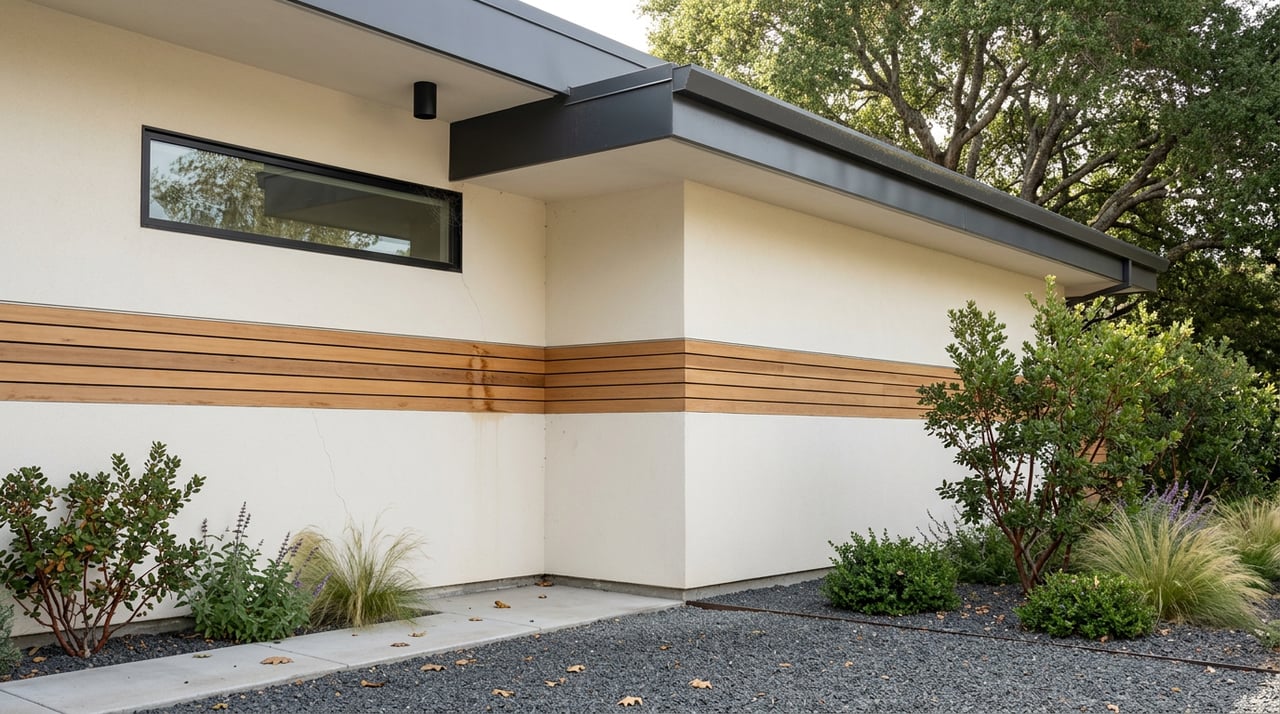
Santa Rosa Housing Market by Price Band in 2026
July 23, 2026
July 23, 2026
Look at any portal and Santa Rosa reads as a single market with a single number attached to it. Redfin put the May 2026 median sale at $750,000, Zillow's typical value index landed at $712,049, and Movoto's July 2026 list median came in at $799,000. Triangulate those and you get somewhere around $720,000 to $750,000 citywide, flat year over year.
That number is close to useless for anyone actually buying or selling here. Santa Rosa in mid-2026 is three separate markets stacked on top of each other, and a hidden insurance-cost wedge decides which one your future address lives in. Before you set an offer strategy or a list price, you need to figure out where the boundaries fall.
The friction that catches out-of-area buyers first is not the price. It is the insurance quote that arrives two weeks into escrow.
Flatland Santa Rosa neighborhoods including West End, Roseland, and central blocks around downtown generally place through the admitted market at rates that look like the rest of California. Hillside parcels inside a CAL FIRE Very High Fire Hazard Severity Zone often cannot. When admitted carriers decline, buyers land on the California FAIR Plan for the wildfire portion and stitch a Difference in Conditions wrap on top for everything else. The California FAIR Plan is the state's insurer of last resort, and its filed premiums for Sonoma foothill ZIP codes commonly run $7,000 to $18,000 per year in 2026. The DIC wrap typically adds another 25% to 60% on top of the FAIR Plan premium.
| Location type | Typical annual homeowners premium (2026) |
|---|---|
| Flatland admitted-market policy | $2,000 to $4,000 |
| Hillside FAIR Plan + DIC wrap | $8,000 to $25,000 |
A 35.8% average FAIR Plan rate hike was filed in October 2025 with an April 2026 effective date pending approval, so quotes pulled last spring will not match quotes pulled this fall. The state's new Safer from Wildfires discount, launched November 15, 2025, can shave up to 16.4% off the wildfire portion when a property documents all twelve hardening measures, which is worth pricing against the cost of the retrofit itself.
Translated into monthly payment terms at a July 9, 2026 Freddie Mac 30-year rate of 6.49%, a $10,000 insurance delta is roughly the same monthly hit as an extra $135,000 of mortgage principal. That is the number that reshapes what a buyer can actually stretch to on the hill versus in the flats, and it never appears in a portal listing.
Once you know which side of the fire-zone line your target parcel sits on, the price band decides everything else. The Modern Living Sonoma Q1 2026 report broke Santa Rosa into three segments, and the trajectories point in opposite directions:
| Price band | Active inventory trend | Absorption | Sold-to-original-list | Months of supply |
|---|---|---|---|---|
| Under $1M | Down 27.5% YoY to 119.7 homes | 58.8% (up from 41.1%) | Close to list on well-prepared homes | Tight |
| Around $1.5M | Roughly flat YoY | 24.1% (up from 20.4%) | 92.7% (down 3 points) | 5.2 |
| Over $2M | Rising | Depressed | 91% | 15+ |
Under a million dollars, new listings dropped 23.3% while pended sales rose 12.9%. That is the clearest seller's-market signal in the county dataset, and it is why Redfin logged 397 May 2026 sales in Santa Rosa versus 355 the year before, with median days on market compressing to 36.
The mid-tier looks flat on volume but tells a subtler story. Sold-to-original-list dropped three full points to 92.7%, which means the average $1.5M seller is giving up more than $100,000 off the initial ask before a deal closes. Days on market shortened to 75, but that improvement is a function of sellers cutting sooner, not buyers moving faster.
Above two million, 15-plus months of supply is a buyer's market by any conventional definition. Sellers closing at 91% of original list are absorbing the gap that comes with sitting on the market past the seasonal window.
Calling Santa Rosa "a seller's market" or "a buyer's market" in mid-2026 is factually wrong in either direction. It is both, at the same time, in the same ZIP code cluster.
The citywide flatness averages neighborhood trajectories that look nothing alike. Zillow's neighborhood breakdown pegs the Fountaingrove median at $1,705,000, West End at $567,840, and St. Rose at $588,243. That is a 3x spread inside one city, which is why the "Santa Rosa average" almost never describes your specific parcel.
Working sub-market by sub-market in 2026 pricing:
The practical read: two homes with identical square footage, both listed at $1.1M, can carry monthly ownership costs that differ by more than $800 depending on the fire-zone designation and the age of the last roof replacement.
If you are selling under $1M in Bennett Valley, Rincon Valley, or the northeast, the Q1 2026 absorption data supports pricing at or slightly above recent comps and holding firm on the first weekend of offers. Well-prepared listings in this band are receiving multiple offers and going pending inside two weeks. Overpricing on the theory that you can always cut is expensive: Movoto's July 2026 numbers show homes sitting a median of 56 days on market citywide, which is where the discipline problem lives.
The $1.5M seller who prices to last spring's comps is now the $1.4M seller who took three price cuts to get there. The average mid-tier seller in Q1 2026 gave back more than $100,000 off the original ask before closing.
Above $2M, the buyer has time and inventory on their side. The most productive listing strategy in that band is professional presentation and a list price the market will actually respond to on day one, because the alternative is 15 months of carrying costs and a 91% ratio anyway.
For buyers, the arbitrage is real: an entry-level buyer in the $700,000s is competing hard, but a move-up buyer stepping into the $1.6M range is negotiating from a stronger position than they have held since 2021. That is not a market-wide condition. It is a price-band condition, and it will not last past the next rate move.
Redfin reported $750,000 for the three months ending May 2026, down 0.66% year over year. Zillow's typical home value index put it at $712,049 with a 0.1% year-over-year gain. Both triangulate to roughly $720,000 to $750,000 citywide, though the number for your specific block is often quite different.
Sonoma foothill ZIP codes commonly see FAIR Plan premiums of $7,000 to $18,000 per year in 2026, with a DIC wrap adding another 25% to 60% on top. Get an actual quote from a broker before removing your inspection contingency, not after.
Both, on the same day. Under $1M ran 58.8% absorption in Q1 2026, a seller's market. Over $2M carried 15-plus months of supply with sellers closing at 91% of original list, a buyer's market. Which one you are in depends on your price band, not the city.
A meaningful share of inventory in Fountaingrove, Coffey Park, and Larkfield-Wikiup is under 8 years old because roughly 5,300 structures were destroyed in October 2017. Buyers pay a premium for the newer construction and current fire-code features, and sellers of older adjacent homes have to price against that comparison.
Traditional total commissions still cluster at 5% to 6%, split between the listing and buyer's agents. On a $712,000 sale that works out to roughly $35,600 to $42,700, though listing-side terms are always a conversation.
The right pricing strategy in Santa Rosa in 2026 depends on which of the three markets you are actually operating in, and the right search strategy depends on which side of the fire-zone line you are willing to shop. If you would like a candid read on where your specific neighborhood, price band, and insurance profile fit into the current data, Crystal Davis is happy to sit down and work the numbers with you. Let's talk about your next move.
Stay up to date on the latest real estate trends.
Born and raised in Sonoma County and backed by nearly two decades of real estate experience, I bring deep local knowledge, trusted expertise, and a genuine passion for people to every transaction. I’m proud to deliver a real estate experience that’s nothing short of exceptional. Explore my website, and don’t hesitate to reach out — we’re in this together!